
Furniture Storage in Dubai
Climate-Controlled, Collected From Your Door, Ready When You Are
Furniture storage in Dubai is a private, climate-controlled unit where your household or office furniture is held securely for a week, a month, or considerably longer while your home is renovating, your lease has a gap, you're relocating, or your new space simply can't absorb everything you own. At eSelf Storage, every furniture storage unit in Dubai and Ajman is maintained at 18–24°C year-round with humidity managed at 40–55%. Collection from your address is available. 24/7 access once the unit is set up. Monthly billing with no minimum beyond the first month.
That's the practical version. The more important version is what happens to furniture that doesn't get stored properly in this city. Dubai's summer runs hot and humid in a way that most people underestimate when it comes to stored belongings. August temperatures average 41°C outdoors. Inside a non-air-conditioned storage unit or a metal container in direct sun internal temperatures can exceed 60°C. Annual average humidity sits around 60–65% in coastal areas, rising during certain weather patterns. That combination dismantles furniture in ways that aren't always immediately visible but are frequently irreversible by the time the items are retrieved.
A leather sofa stored for a Dubai summer in a hot unit doesn't announce what's happening to it. The oils that keep leather supple evaporate quietly in sustained heat. The surface starts cracking weeks later. A solid wood dining table stored in humidity-variable conditions warps progressively, joints shifting as the timber absorbs and releases moisture. Neither damage is cheap to fix. Most of it can't be fixed at all. eSelf Storage was built around one decision: every unit is climate controlled, all the time. Not a cooled premium tier and a cheaper warm option. One standard. The furniture that goes in comes back in the same condition.
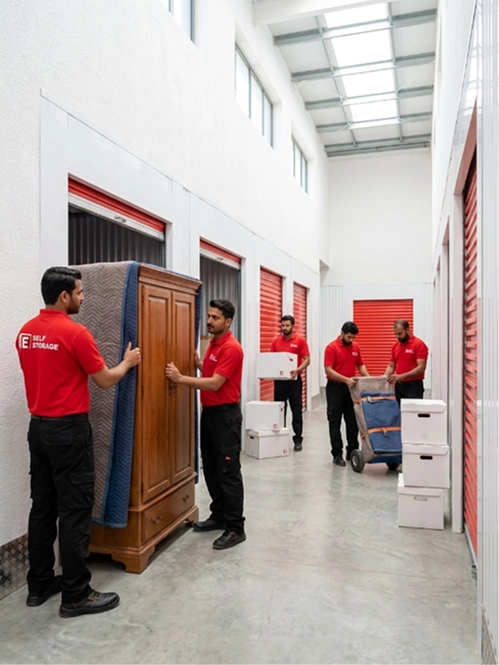
What Situations Lead to Furniture Storage in Dubai?
The situations are more varied than most people expect before they find themselves in one.
Home renovation — the most common reason
A kitchen renovation. A full apartment refurbishment. A villa flooring replacement that requires every room to be cleared before the contractors can work. Renovation timelines in Dubai rarely run exactly as planned: a three-week project becomes five weeks, a two-month job extends to three. The furniture that is cleared for contractors needs to be somewhere safe, clean, and not in the middle of the living room.
Renovation dust is its own problem. Fine particulate from drilling, sanding, and cement work travels through gaps and vents into adjacent rooms. Fabric absorbs it. Electronic vents fill with it. Polished furniture surfaces get scratched by it. Storing furniture off-site during the active work phase isn't just about space, it's about returning to a home where the furniture is actually clean.
Between tenancy contracts — the gap nobody plans for
Dubai's rental market runs on annual lease cycles. Ejari contracts have fixed end dates. Property handovers run late. The new place isn't ready when the old lease ends, or there's a deliberate gap while a decision is made. That gap is rarely zero days in practice — it runs anywhere from two weeks to two months for most people.
The furniture has to go somewhere. Options include leaving it in the old apartment past the handover date (not usually possible), storing it with friends (not usually practical), or putting it properly in a managed unit that holds it safely until the new property is ready. Dubai's property market added over 99,000 sales transactions in the first half of 2025, up from 81,286 in the same period of 2024. A city moving that fast generates a lot of between-tenancy gaps and a lot of furniture that needs short-term storage to bridge them.
Downsizing from villa to apartment
Dubai apartment prices rose approximately 20.7% year-on-year in mid-2025. Villa prices rose 24.3%. Those increases pushed a meaningful number of families from villas into apartments — trading space for manageable rent. The problem is that villa furniture doesn't compress. A 4-bedroom villa furnishes rooms that a 2-bedroom apartment simply doesn't have.
Some furniture gets sold. Some get given away. But pieces with real financial or sentimental value — a dining set, a custom wardrobe, a quality sofa, children's bedroom furniture being kept for a younger sibling — go into storage until the living situation changes again or a more permanent decision gets made.
Leaving Dubai for the summer or an extended period
Many Dubai residents spend June to September abroad. Some are gone for longer — a work posting to another country, an extended family stay, a career change that temporarily relocates them. An apartment left unoccupied for three months with the air conditioning running costs money. An apartment left unoccupied without the air conditioning carries significant risk of humidity damage to furniture, particularly textiles and wood.
Moving the important pieces into a climate-controlled unit for the duration and leaving the apartment at minimal utility use is often the more practical and cost-effective approach.
International relocation — staying, leaving, or in between
Dubai has a large internationally mobile population. People arrive with furniture, leave with some of it, leave other pieces behind. An international move where shipping costs don't justify taking everything creates a natural furniture storage need. Some pieces come with you, some stay in Dubai until you know whether you're coming back, some stay because the shipping quote came in too high.
eSelf Storage handles the Dubai end for international relocations — furniture stored in a properly climate-controlled, individually secured unit while the destination chapter settles. Accessible to authorised contacts if something specific is needed while the owner is abroad.
New property not ready — waiting for a handover
Off-plan property purchases in Dubai routinely involve waiting for a handover date that arrives after the previous residence has been vacated. Buyers who've sold or given up their rental ahead of the handover need somewhere for their furniture in the interim.
The furniture storage period might be two weeks or six months depending on how the developer's timeline and the buyer's own have aligned. A climate-controlled unit holds everything securely until the keys are in hand and the move-in can happen.
The climate control difference for furniture
Dubai's summer runs hot and humid in a way that most people underestimate when it comes to stored belongings. August temperatures average 41°C outdoors. Inside a non-air-conditioned storage unit or a metal container in direct sun, internal temperatures can exceed 60°C. Annual average humidity sits around 60–65% in coastal areas, rising during certain weather patterns. That combination dismantles furniture in ways that aren't always immediately visible but are frequently irreversible by the time the items are retrieved.
eSelf Storage was built around one decision: every unit is climate-controlled, all the time. Not a cooled premium tier and a cheaper warm option. One standard. The furniture that goes in comes back in the same condition.
How Should Furniture Be Prepared
Before Going Into Storage?
Packing quality matters. A climate-controlled unit protects against heat and humidity. It doesn't protect against scratches from items shifting in transit, surface damage from furniture placed directly on concrete, or moisture trapped inside tight plastic wrapping.
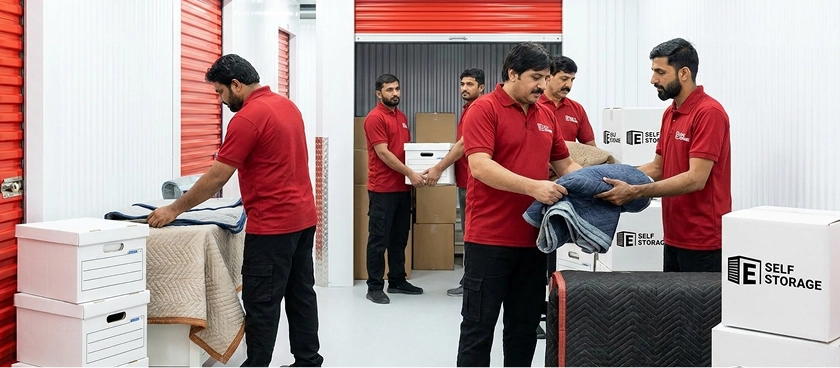
Furniture blankets and moving pads for surfaces
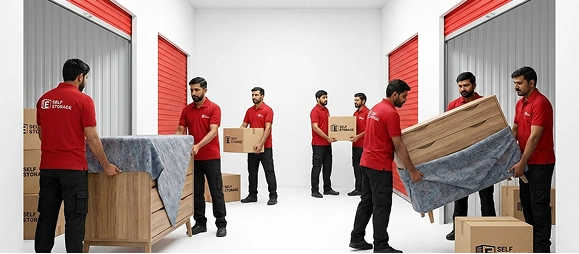
Polished timber, lacquered cabinet faces, upholstered panels, and glass surfaces all need padding between them and other surfaces. Furniture blankets or padded moving wraps cover corners, edges, and faces before items go into transit and stay on them inside the unit.
Direct contact between unpadded furniture pieces causes surface damage regardless of how carefully the unit is managed.
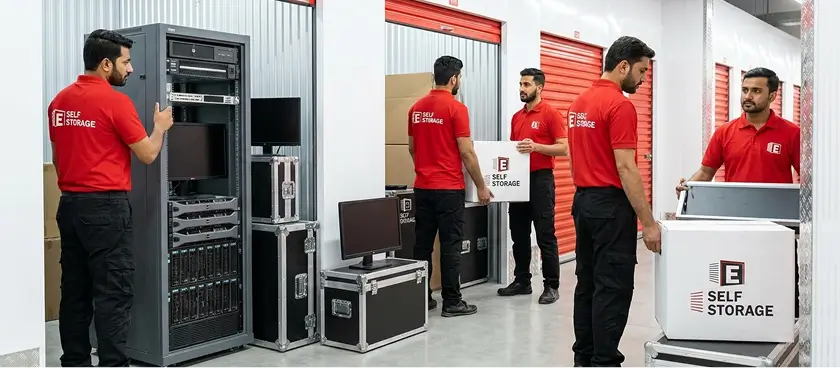
Breathable wraps not sealed plastic
Wrapping furniture in thick plastic sheeting sounds protective. In practice, if any moisture is trapped inside the plastic wrap — which is almost inevitable in Dubai's ambient humidity — the plastic seals it against the surface. Condensation develops inside the wrap against the furniture face.
The result is exactly the moisture damage the wrap was supposed to prevent. Breathable covers allow the climate control system inside the unit to do its job.
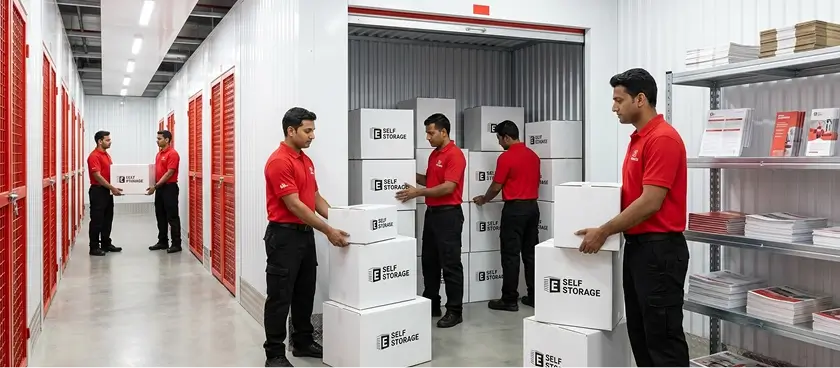
Elevate items off the floor
Placing furniture directly on a concrete storage floor creates moisture contact at the base. Pallets, furniture risers, or wooden slats under the legs of sofas, wardrobes, and cabinets allow airflow underneath.
It prevents direct concrete contact and stops base-level moisture absorption. It's a simple step that makes a significant difference to long-term storage condition.
Disassemble flat-pack and modular pieces
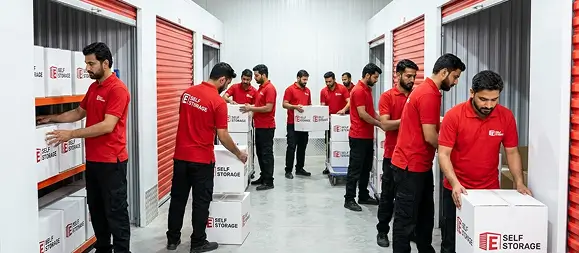
Wardrobes, flat-pack shelving, and modular furniture that was designed to be disassembled should be taken apart for storage. They take up less space in the unit, reducing the overall monthly cost.
They're also less vulnerable to warping and joint stress when stored in component form rather than fully assembled under variable conditions.
Photograph before storage
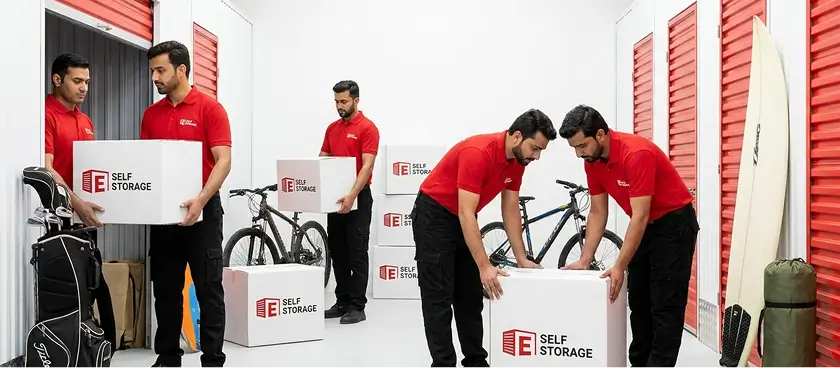
Taking photographs of furniture condition before it goes into storage gives you a clear, timestamped record if there's any question about condition on retrieval. Photograph all sides of each significant piece.
Note any pre-existing marks, scratches, or damage before the unit is sealed. This protects both you and the storage provider by establishing a clear baseline.
Packing materials available
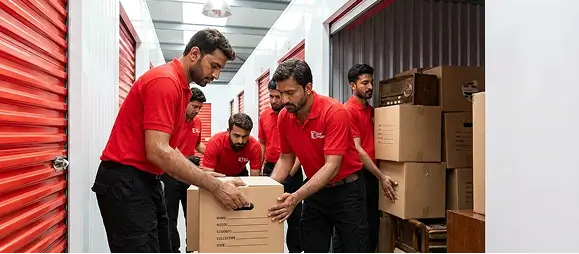
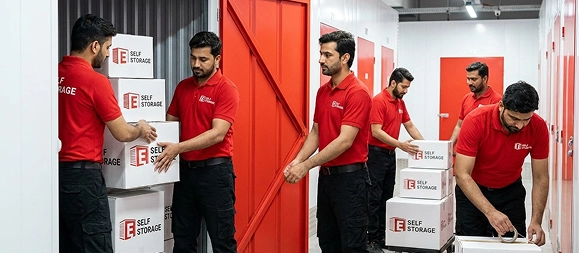
We can supply packing materials including furniture blankets, stretch film, and protective covers when you book a collection or bring items directly to the facility.
Everything is ready on arrival so you don't need to source your own. Just ask when you contact us to book.
What Unit Size Do You Need for Furniture Storage in Dubai?
The most common mistake is underestimating volume — particularly for villa furniture — and ending up with a second unit or damaged items because the first was too small to store safely.
2–3 single chairs, side tables, flat-packed shelving, boxes
Studio apartment furniture — single bed, wardrobe, small sofa, boxes
1-bedroom apartment furniture — double bed, wardrobe, sofa, dining set, boxes
2-bedroom apartment full contents including all furniture
Full 3-bedroom villa furniture or large apartment with appliances
- A studio apartment in Dubai generates 8–12 CBM of furniture and belongings; a 40 to 50 sq ft unit handles it.
- A 1-bedroom apartment with a full furniture load runs 12–18 CBM. A 75 sq ft unit is the right fit.
- A 2-bedroom apartment generates 20–30 CBM — 100 to 150 sq ft depending on furniture volume and appliances.
- A 3-bedroom villa generates 35–50 CBM — 200 sq ft minimum, potentially larger for well-furnished properties.
Pre-move assessments available on-site or via WhatsApp video
Furniture volumes vary significantly based on the property's furnishing level and whether appliances are being stored. For larger properties, a pre-move assessment gives a more accurate unit recommendation.
What Does Dubai's Climate Do to Furniture Without Climate Control?
There's a story worth sharing here. A client contacted a Dubai moving company in 2025 to retrieve furniture from a storage unit he'd rented in 2021 — four years earlier, what he'd intended as a temporary arrangement. Over those four years he paid approximately AED 850 per month, totalling over AED 40,000 in storage fees. The furniture he retrieved was worth roughly AED 12,000 when he'd stored it, maybe AED 6,000 by the time he got it back after four years in a non-climate-controlled unit. The leather sofa had mold. The wooden dining table had warped. The electronics were dead. He paid AED 40,000 to damage AED 12,000 of furniture. That's an extreme case. But the principle it illustrates is consistent.
Leather sofas and upholstered furniture
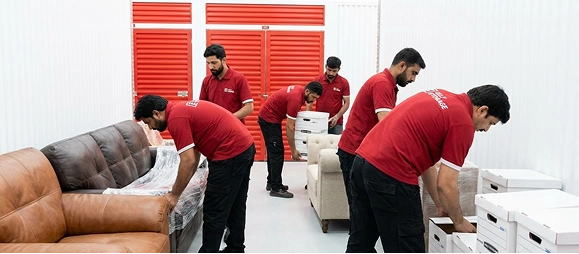
Leather's condition depends on the oils retained in the material. Sustained heat at the temperatures inside a non-cooled Dubai unit — which can exceed 60°C internally in summer — drives those oils out. The surface dries. It becomes prone to cracking. The damage is visible and permanent. A high-quality leather sofa worth AED 8,000–15,000 can become visibly compromised after a single Dubai summer in uncontrolled storage. Re-conditioning helps marginally. It doesn't reverse significant heat damage.
Solid wood and timber furniture
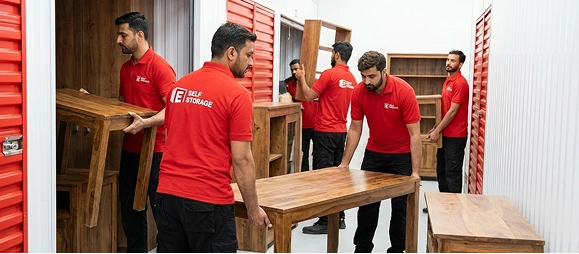
Wood moves with moisture. It absorbs humidity and expands, releases moisture and contracts. In a storage environment where humidity fluctuates between the dry conditions of an air-conditioned building during working hours and the ambient 60–65% outdoor humidity at other times — the wood cycles repeatedly. That cycling is what causes joints to fail, surfaces to lift, and flat-pack components to delaminate. A dining table that arrived straight can leave with a visible bow across its surface.
Composite and engineered wood
MDF and particleboard — used extensively in flatpack and volume furniture — are more susceptible to moisture than solid wood. The binders that hold the composite material together weaken with humidity exposure. Surfaces bubble and lift. Edges swell. The structural integrity reduces, particularly in the faces of cabinet doors and wardrobe panels.
Upholstered fabrics, mattresses, and metal fittings
Fabric absorbs moisture readily. In conditions above 60% relative humidity — which Dubai's uncontrolled storage environments regularly reach — mold begins growing on organic materials. Upholstered sofas, fabric armchairs, and mattresses develop a mildew smell that penetrates the foam and padding deeply. Glass surfaces attract condensation; metal fittings develop surface corrosion. Professional cleaning reduces the smell. It rarely eliminates it completely.
63% report damage in non-climate storage. 12% in climate-controlled units.
An estimated AED 220 million is spent annually by Dubai residents replacing damaged stored items. The climate-controlled premium runs 20–40% above standard storage — against a backdrop where a single damaged high-value piece can exceed the total cost of proper climate control for the full storage period. eSelf Storage maintains every unit at 18–24°C with humidity at 40–55% — continuously. It's not a luxury offering. It's what makes the difference between retrieving your furniture and retrieving damaged versions of it.
How Much Does Furniture Storage in Dubai Cost at eSelf Storage?
Every unit at eSelf Storage is climate-controlled. The pricing below reflects climate-controlled storage; there is no cheaper uncooled tier.
Leaving furniture in a property past handover isn't usually possible. Storing with friends isn't practical for large items. Warehouse space in Al Quoz averaged AED 42 per square foot annually in Q1 2025, with minimum one-year leases, service charges, and VAT on top. Non-climate-controlled containers risk humidity damage that can exceed the total storage cost.
A furniture storage unit at eSelf Storage runs on a monthly rolling basis with no minimum beyond one month. Every unit includes year-round climate control at 18–24°C, humidity managed at 40–55%, Dubai Police-approved security, 24/7 CCTV, individual unit alarm, Civil Defence-compliant fire safety, and 24/7 customer access. The figure we quote is the monthly amount — no activation fee, no hidden line items.
The practical calculation for furniture storage isn't whether it costs money. It's whether the monthly cost is lower than the risk of damage, the expense of warehouse infrastructure, or the rent paid on a property kept empty just to hold furniture. In Dubai 2025, the answer is consistently yes.
Book a 12-month unit and receive one free month. For families mid-renovation or between properties who know the storage period will be significant, the annual plan reduces the effective monthly cost. Minimum rental remains one month — if your renovation finishes in five weeks, you pay for five weeks.
Door-to-door collection/redelivery (confirm pricing for your address) and packing materials (available on request)
Contact us for your specific unit rate. The figure we give you is the monthly amount — no activation fee on arrival, no hidden line items. For furniture that carries financial or sentimental value, climate-controlled storage at eSelf Storage is straightforward protection against an outcome that's both financially and emotionally costly.
What Customers Say About
E Self Storage Furniture Storage
"We stored a 3-bedroom villa full of furniture for four months during a complete refurbishment. Two leather sofas, three beds, a large dining table, all the wardrobes, children's furniture, appliances. The collection team wrapped everything before loading. I didn't have a single concern watching them handle the dining table. Four months later, everything came back in exactly the same condition. The leather hadn't cracked, the wooden pieces hadn't moved, nothing had a humidity smell. I've since recommended eSelf Storage to two other families who were in the same position. The invoice was what was quoted."
"We had a three-week gap between our old apartment handover and the new one being ready. Not long enough to justify proper logistics, long enough that leaving furniture unsecured wasn't an option. eSelf Storage had a unit available the same day we called. The collection team was at our apartment the following morning. Everything was back in the new place three weeks later without a mark on it. For a short-term need that felt like it was going to be complicated, it turned out to be very simple. That's all you want from storage."
"I moved from a villa in Mirdif to a two-bedroom apartment in JLT. There was no version of that where all the furniture fit. Kept the pieces I actually needed and stored the rest — dining room set, two extra beds, the outdoor furniture, assorted boxes. My intention was to keep the storage unit for six months while I figured out what to do with it. I ended up keeping it for eleven months. During that time I retrieved items on three separate occasions, always at times that suited me. Everything in that unit came out of it undamaged. The outdoor furniture was the one I'd been most nervous about — it's teak and humidity is unkind to it. Came back fine. Worth every dirham of the monthly cost."
Common Questions About Furniture Storage in Dubai
As long as you need to. The minimum rental is one month. There's no maximum. Furniture stays in the unit for as long as the monthly rental continues a week over a month, three months, a year, or longer. When you're ready to retrieve, give us one month's notice. We'll confirm a redelivery or collection date at your convenience.
You don't have to, but for flat-pack items and modular furniture it's strongly recommended. Disassembled pieces take up significantly less unit space which reduces the unit size you need and therefore the monthly cost. They're also less vulnerable to warping when in component form. Solid furniture like sofas, armchairs, and solid wood tables are generally stored assembled. We can advise on specific pieces when you book.
We maintain backup systems and continuous monitoring specifically to prevent unplanned outages in the climate control. Sensors track temperature and humidity continuously with alerts triggered by any significant deviation. In the unlikely event of a maintenance issue, it is identified and addressed quickly rather than discovered by a customer on retrieval day.
Yes. 24/7 access means you can visit the unit at any time to retrieve a specific piece, to add items, or to check on the unit. You don't need to notify us in advance or book an access time slot. Your unit is individually locked under your own lock.
The premium for climate-controlled storage over non-climate-controlled storage in Dubai runs roughly 20–40% higher per month. Whether that premium is worth it depends on what you're storing. For leather furniture, solid wood pieces, upholstered items, or anything with meaningful financial or sentimental value the climate-controlled premium is straightforwardly worth it. The 63% damage rate for non-climate-controlled storage users in Dubai versus 12% for climate-controlled users reflects a real risk differential. One damaged piece in a cheap uncooled unit typically costs more to replace than the full climate-controlled storage bill for the period.
For standard bookings, same-day confirmation is usually possible during business hours. If you need collection from your address within 24–48 hours, contact us as early as possible to confirm crew availability. For large villa moves where the full furniture load needs to be collected in a single operation, a few days' notice gives us the best chance of scheduling the right crew and truck size.
Ready to Store Your Furniture in Dubai?
Tell us what you need to store — a rough description is enough to start. Sofa and bedroom, full villa, just a dining set, whatever it is. We'll recommend the right unit size, confirm the monthly rate, and tell you if a collection from your Dubai or Ajman address is available for your date.
The furniture you've accumulated in Dubai deserves to come back the way it went in. Climate-controlled, individually secured, collected from your door if that's what makes it easier.