
Personal Storage in Dubai
Your Own Secure Space, Available the Day You Need It
At eSelf Storage, personal storage units in Dubai and Ajman start from compact lockers and scale to larger spaces depending on what you need. Every unit is climate-controlled at 18–24°C year-round. Dubai Police-approved security on-site. 24/7 access. Monthly billing with one month minimum.
The reason personal storage in Dubai exists as a mainstream service — not a niche one — comes down to how the city works. Over 80% of Dubai's nearly 4.1 million residents rent their homes. Most of those homes are apartments. The average studio in Dubai runs about 500 square feet. A typical one-bedroom apartment is around 850 square feet. They're decent places to live. They were not designed with storage in mind.
Built-in storage space in Dubai apartments tends to be limited. A wardrobe, sometimes a pantry, occasionally a storage room if the layout is generous. For the accumulated belongings of someone who's lived here for two, three, or five years — the seasonal changes, the hobby equipment, the items from a previous relationship or a stage of life now passed — the apartment simply stops absorbing it. The options at that point are: get rid of things you're not ready to part with, upgrade to a larger apartment and pay an extra AED 20,000–40,000 per year in rent, or rent a personal storage unit at AED 300–500 per month and keep what you own without the apartment showing it.
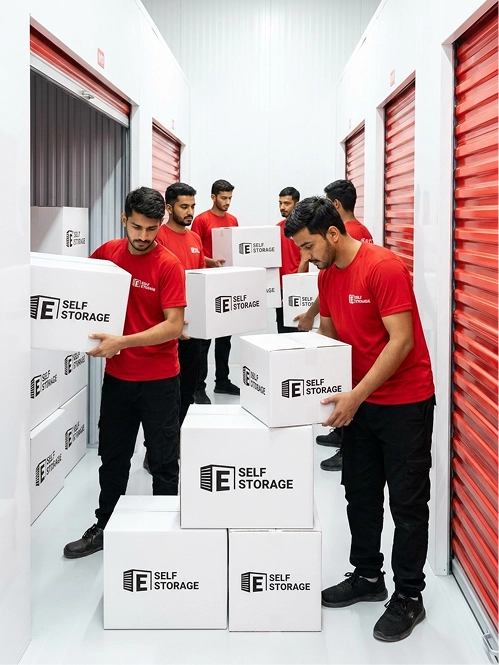
Why Do Dubai Residents Use Personal Storage?
The range is wider than most people expect before they find themselves in one of these situations.
The compact apartment that stopped having room
Dubai's apartments are not small by the standards of most major cities. But they don't have spare bedrooms. They don't have attics, basements, or garages. The items that accumulate over several years of living somewhere — children's items from a previous age, sporting equipment for a sport you still intend to go back to, gifts you can't bring yourself to discard, books that won't fit another shelf, equipment from a side project that's on pause — gradually displace the usable space in a way that happens slowly and then suddenly feels overwhelming.
Personal storage handles the items that don't live in the apartment without being given away. The apartment gets its space back. The items get proper climate-controlled protection rather than being crammed into a cupboard that's already overflowing.
The expat going home for the summer
Dubai's population drops visibly between June and September. Residents return to home countries — India, Pakistan, the UK, the Philippines, Egypt, Lebanon, and dozens of other places — for anything from six weeks to four months. The apartment either stays empty with the air conditioning running, which costs money and carries risk, or it empties while the important items go somewhere properly managed.
Personal storage for summer is one of the most common use cases eSelf Storage sees. Luggage stored until the return flight date. Winter clothing kept off-season in the UAE. Electronics that shouldn't sit in an unoccupied apartment. Valuables that don't belong in transit. The unit costs significantly less per month than three months of apartment utilities running on an empty space.
The person in between apartments
Dubai's Ejari lease cycles create gaps. You've given back the keys on the old apartment. The new one isn't ready. Maybe the handover is delayed by two weeks. Maybe you're staying with a friend for a month while the new place gets sorted. In the gap, the personal items that matter most — clothing, documents, electronics, valuables — need to be somewhere secure, accessible if anything specific is needed, and not in the way of the arrangement you've made for sleeping accommodation.
A small personal storage unit holds the essentials during that in-between period. It's the version of a storage unit that doesn't require moving your entire life — just the things that need a proper home for a defined period.
The student at the end of the academic year
Dubai's universities and colleges see significant departure at semester end. International students returning home for the summer don't want to transport everything twice. Textbooks, a season's worth of clothing, a bicycle, a mini-fridge, electronics from the room. A personal storage unit holds it from May to September, and the items are there when the new academic year starts.
The person who moved into a smaller apartment
This happens regularly in Dubai as rents shift and circumstances change. Someone who was in a 2-bedroom flat is now in a 1-bedroom. Someone who had a villa now has an apartment. The living space shrank. Not everything fit. But not everything was ready to be sold or given away either — children's items being saved, furniture waiting for a different living situation, belongings from a relationship or life chapter that's changed but not entirely closed.
Personal storage holds those items properly. Climate-controlled, so they come back in the same condition. On your schedule, not a pressure to decide.
The frequent traveller who needs reliable access
Some Dubai residents travel for weeks at a stretch — business travel, long-haul contracts, roles that involve regular international movement. Each time they leave, the question of what to do with luggage, seasonal items, and the belongings that accumulate around a life of travel recurs. A personal storage unit functions as a fixed point. Items go in before a trip. Items come back out on return. The arrangement doesn't depend on a friend's generosity or a hotel room's luggage storage.
The person decluttering without discarding
There's a specific emotional difficulty in letting go of items that have meaning but no current use. A family member's belongings after a loss. Childhood items you're keeping for your own children. A collection that deserves proper storage rather than the back of a wardrobe. Personal storage removes the pressure of the binary — keep it accessible at home, or give it away. The unit is a third option: kept, protected, and retrievable.
What Items Go Into
Personal Storage in Dubai?
From seasonal wardrobes to personal archives select an item type to see exactly how personal storage handles it.
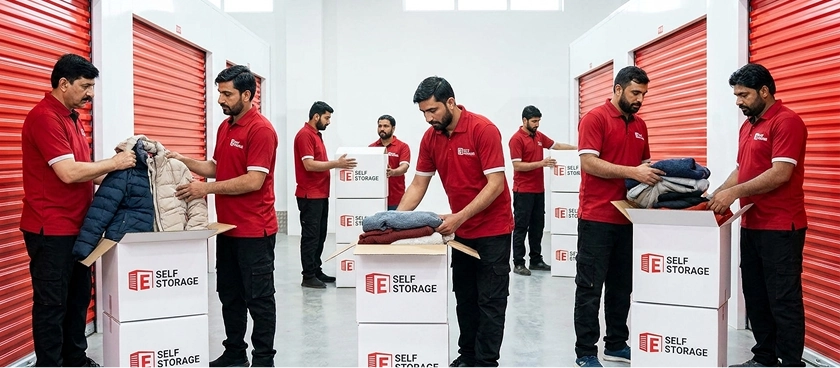
Seasonal clothing and winter wardrobes
Dubai has a distinct seasonal wardrobe pattern. The summer months — May through September — don't require coats, heavy jumpers, boots, or winter layers. Residents who keep year-round wardrobes in a Dubai apartment quickly find that the non-seasonal items take up the space the current-season items need.
Storing the off-season wardrobe in a climate-controlled personal unit keeps clothing protected from humidity (Dubai's average sits around 60%), frees the wardrobe space for what's currently being worn, and means the winter items come back fresh rather than having sat in plastic bags at the back of a shelf for six months.
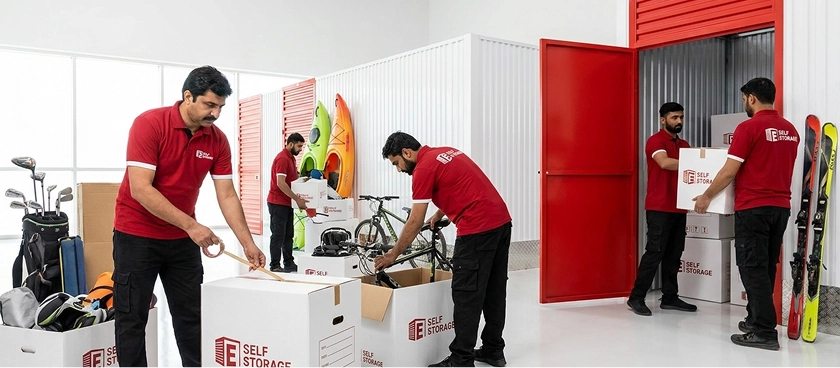
Sporting equipment and hobby gear
A bicycle. A paddleboard or kayak. Desert camping equipment that only comes out from October to March. Golf clubs. Skiing gear for the annual trip. Gym equipment bought optimistically and waiting for a better time. Most of these items are too large for the apartment and too valuable or specific to replace easily.
A personal unit holds them without the apartment having to absorb them.
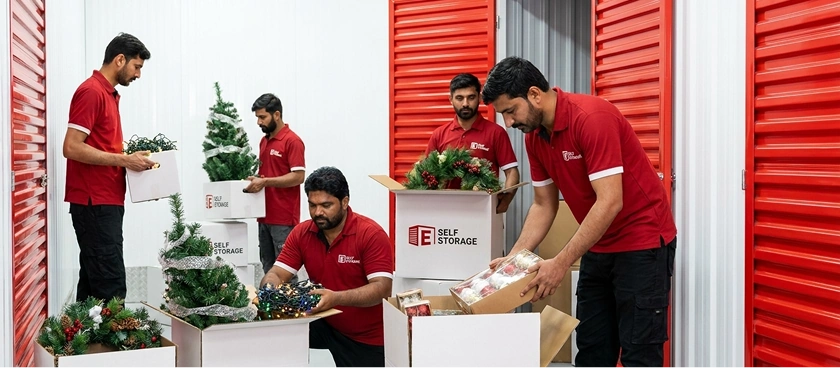
Holiday decorations and seasonal items
Christmas trees, decorations, Eid lanterns, seasonal kitchenware used once or twice a year. These items are used for a few weeks annually and stored for the rest of it. In a Dubai apartment without a spare room, they typically end up in awkward compromises — under the bed, on top of wardrobes, in the one storage room that also holds everything else.
A dedicated unit handles the annual cycle more cleanly.
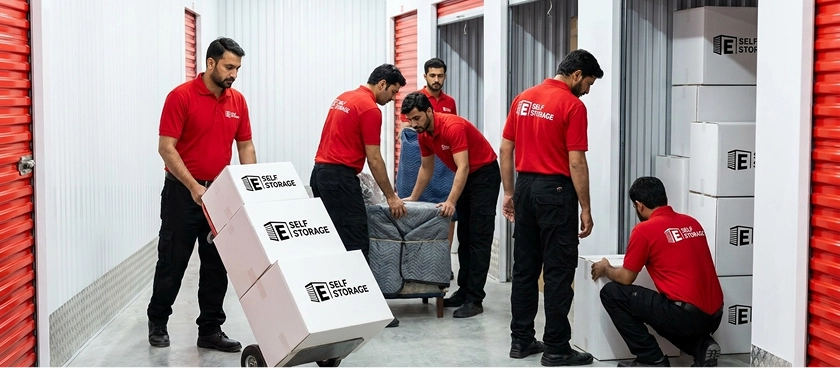
Valuables during travel or transition
Jewellery, heirlooms, important documents, items with sentimental value that shouldn't be left in an unoccupied apartment or a shared living situation. The security at eSelf Storage — Dubai Police-approved on-site guards, 24/7 CCTV, individual unit alarms — is specifically what these items require.
Personal storage for valuables is about proper security, not just space.
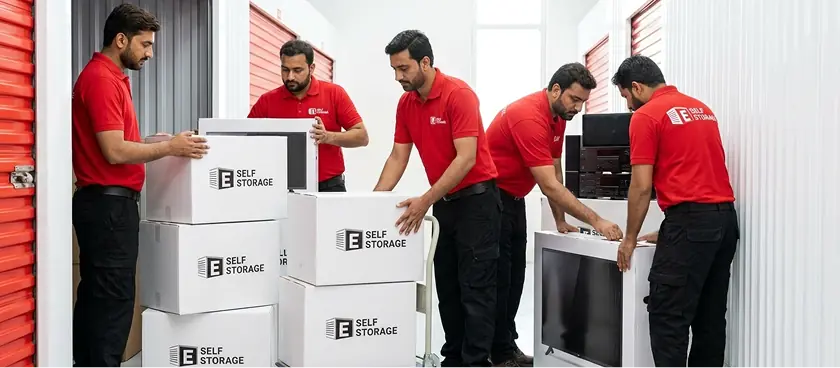
Electronics not currently in use
A camera system bought for a project that's paused. Old laptops kept because the data wasn't properly migrated yet. Audio equipment for a setup that didn't work in the current apartment. Gaming systems between phases of life. Electronics stored in Dubai need climate control specifically — sustained heat above 35°C begins degrading circuits, batteries swell, screens develop issues.
Climate-controlled personal storage protects electronics that aren't in use but aren't ready to leave.
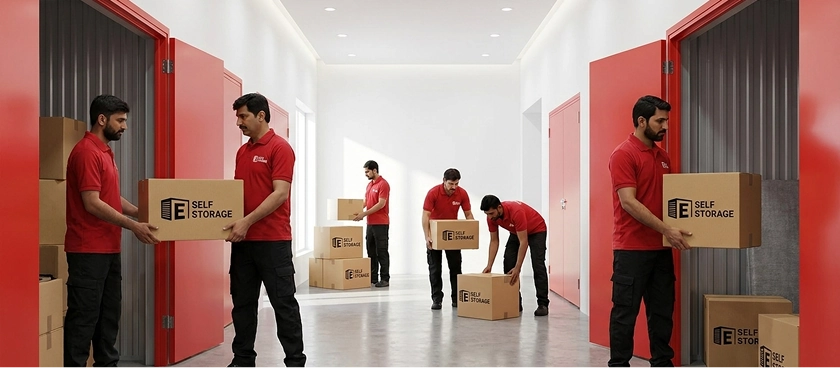
Children's items between stages
Infant furniture kept for a second child who hasn't arrived yet. Toys from an age just passed that a younger sibling might use. Books, learning materials, and equipment from previous years that have value but no current role in daily life.
Personal storage handles the in-between period without the apartment bearing the volume of multiple stages simultaneously.
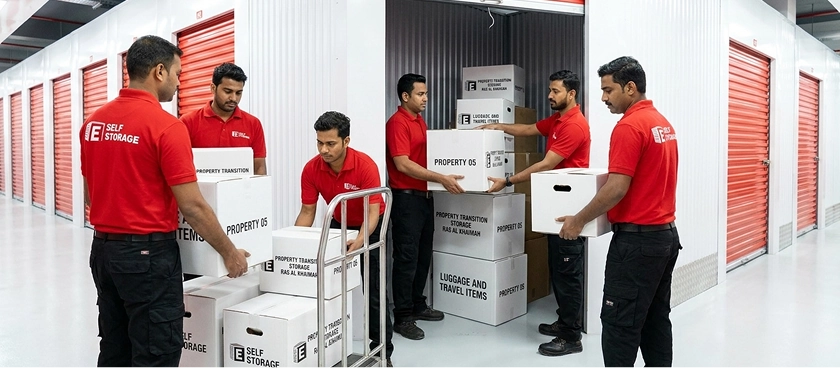
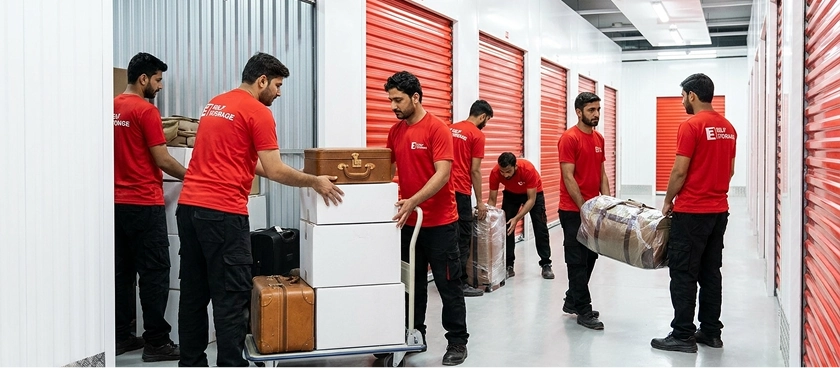
Luggage and travel items
Large suitcases, travel bags, camping gear, and the general infrastructure of a life that involves regular travel take up significant space in a Dubai apartment. They're not used most of the time. A personal locker or small unit holds them until the next trip, the next move, or the next time they're needed.
Personal archives and documents
Important papers, certificates, printed photographs, personal records. Not needed daily. Too important to risk losing in an unmanaged environment. Climate-controlled storage at 40–55% relative humidity protects paper from yellowing and photographs from sticking together — the standard for document preservation that household conditions in Dubai's humid summer don't reliably provide.
What Size Personal Storage Unit Do You Need in Dubai?
Personal storage requirements vary enormously. Someone storing a season's worth of clothing and two suitcases needs a very different unit from someone holding six years of accumulated personal items during a long-term assignment abroad.
10–20 boxes, 2–3 suitcases, seasonal clothing, documents, small electronics
Locker contents plus sporting equipment, bicycle, seasonal furniture, larger electronics
A room's worth of personal items — clothing, luggage, sports gear, small furniture pieces, boxes
Extensive personal collection, several years of accumulated items, plus furniture pieces
- A summer storage arrangement — luggage, seasonal clothing, and personal electronics — typically fits a 25 sq ft locker.
- A between-apartments gap with personal clothing and valuables fits a 25–35 sq ft unit.
- A studio apartment overflow — seasonal items, sporting equipment, holiday decorations, archived belongings — fits a 50 sq ft unit.
- A long-term overseas assignment where most personal belongings stay in Dubai fits a 75–100 sq ft unit depending on the volume.
Describe what you have and we'll recommend honestly
Including telling you if a smaller unit handles it cleanly. Message us on WhatsApp — most size questions are answered in one exchange.
Why Does Personal Storage in Dubai Need Climate Control?
The items most people store personally are the items most vulnerable to Dubai's climate.
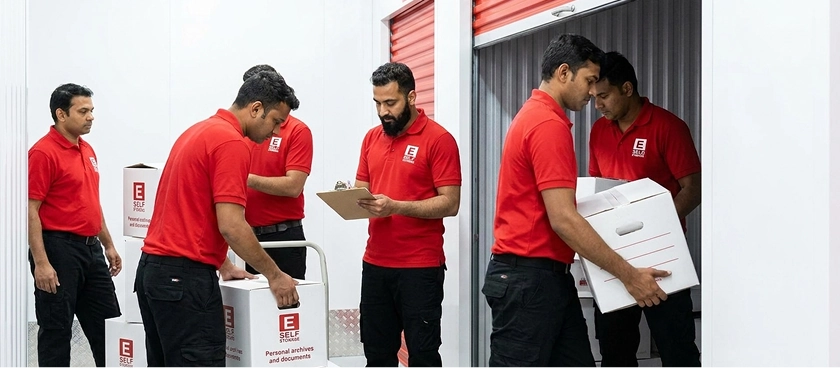
Clothing absorbs moisture readily
Humid conditions — Dubai's average humidity sits at 60–65%, rising in summer — cause fabric to develop a mildew smell that penetrates deeply. Seasonal clothing stored for six months in a humid environment may come back unwearable rather than simply dusty.
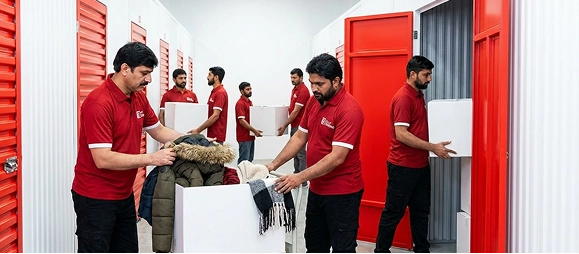
Electronics fail progressively in sustained heat
At temperatures above 35°C, internal components degrade. A stored laptop or camera kept in a hot non-cooled unit through a Dubai summer develops problems that don't always announce themselves on retrieval — the damage is internal and shows up later.
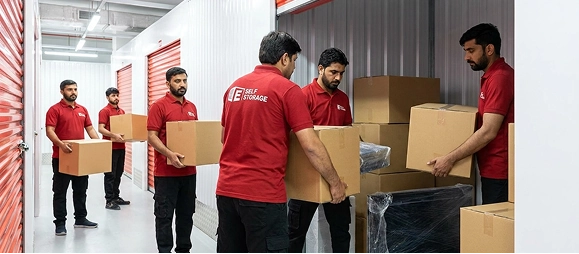
Documents and photographs yellow and become brittle
Photographs stick together when relative humidity rises above 60%. Important certificates, printed photographs, and personal records stored without proper humidity control can be permanently damaged after a single summer.
Leather goods dry out and crack in sustained heat
Bags, shoes, jackets — dry out and crack in sustained heat just as leather furniture does. The condition loss on quality leather items stored in hot units is visible and not reversible.
Every unit runs at 18–24°C with humidity maintained at 40–55% — continuously
This protects clothing, electronics, documents, and everything else you're storing from the specific climate risks Dubai presents. It's not a luxury offering. It's what makes the difference between retrieving your belongings and retrieving damaged versions of them.
How Do You Set Up and Use a Personal Storage Unit at
ESelf Storage?
Contact us first. It takes one conversation
WhatsApp or call +971 58 629 5123. Tell us what you're storing — clothing, luggage, sporting equipment, electronics, a general personal mix. A rough description gives us enough to recommend the right size unit and confirm availability at our Dubai or Ajman facility.
Your quoted rate is your billed rate
The monthly amount we confirm during that first conversation appears on every invoice. No activation charge when you arrive. No facility maintenance fee added to the first month's bill. The number you were given is the number you pay.
Collection or drop-off — you choose
We offer door-to-door collection from Dubai and Ajman addresses. Our team collects your items from your apartment or home, handles them carefully, and delivers to your unit. Or you bring items directly to the facility and we guide you in. Either way, everything is recorded on arrival and the unit is sealed under your individual lock.
Your lock, your access 24/7
Once the unit is set up, you can return to it at any time. No appointment needed. No notification required. No access window. 3AM on a Saturday or 9AM on a Monday — the facility is open, the security is on-site, and your unit is accessible.
Close when you're ready
One month's notice ends the rental. We confirm the closing date, you clear the unit, and the deposit returns once the unit is confirmed empty and clean. No exit inspection fees, no administrative penalties.
Is Personal Storage in Dubai Actually Worth the Monthly Cost?
The financial case is clearer than most people realise before they run the numbers.
Dubai's studio apartments average AED 48,955–52,000 per year in annual rent. A one-bedroom apartment averages AED 75,000–90,000. The gap between those two options runs AED 20,000–40,000 annually — which is AED 1,700–3,300 per month more for the upgrade in space.
A personal storage unit at eSelf Storage starts from around AED 300–400 per month for a locker that holds 15–20 boxes worth of personal items. AED 700–900 per month for a small unit that holds a studio's worth of overflow. Even at the upper end for a medium unit, the monthly cost is a fraction of what the apartment rent gap represents.
The practical calculation for someone living in a studio or compact 1-bedroom isn't whether storage costs money. It's whether the storage cost is lower than the rent increase required to get the equivalent space inside the apartment. In Dubai 2025, the answer is consistently yes.
Three months of Dubai utilities running on an unoccupied apartment — air conditioning, electricity, water — costs more than three months in a personal storage unit while the items are properly managed off-site.
estimated spent annually by Dubai residents replacing damaged stored items
For personal belongings — winter clothing, electronics, important documents, valuables — the cost of damage is personal as well as financial. A winter coat that develops mildew from six months in a humid unit isn't replaceable in the same way a piece of furniture is. The 20–40% climate-control premium over non-cooled storage is genuine insurance against an outcome that's both financially and emotionally costly.
What Customers Say About
ESelf Storage
"We were finishing a villa renovation in Mirdif and needed somewhere for the furniture that wasn't going to cook it in a metal container for two months. We stored a three-piece leather sofa set, the dining table, two wardrobes, and about thirty boxes of kitchen and bedroom items. Everything came back in the exact condition it went in — the leather hadn't dried out, nothing had a humidity smell. The collection and redelivery team were careful with the flooring both times. I was honestly expecting one thing to go wrong. Nothing did."
"We had a six-week gap between our old Business Bay office lease ending and the new space being handed over. Forty-something boxes of archived documents, office chairs, workstations, and a server cabinet that we couldn't leave unattended. eSelf Storage gave us a business unit, collected from the old office, and we retrieved items in three separate batches over the six weeks. The 24-hour access was the thing — our IT guy needed the server cabinet at 10PM on a Thursday and just went and got it. That kind of flexibility is worth paying for."
"I've been doing the same thing for three years — storing luggage and seasonal items here every June when I go back to India for the summer, and collecting everything in September when I return. It solved a problem I used to pay too much to solve badly. The unit is clean, the security feels genuine not performative, and the monthly rate is fair for Dubai. Booking has gotten easier each year. I recommended it to four colleagues at work and at least two of them now do the same thing."
Common Questions About Personal Storage in Dubai
One month. The minimum exists as a billing requirement, not a commitment. If your between-apartments gap runs three weeks, you pay for one month. If your summer abroad extends, you extend the unit on a month-to-month basis. One month's notice closes the unit when you're done.
Yes. 24/7 access means exactly that — including Friday evenings, public holidays, and early mornings. The facility doesn't have staffed opening hours that limit when you can use your unit. On-site security operates continuously, so access outside business hours is properly managed rather than unmonitored.
For most people storing seasonal clothing, a couple of suitcases, and personal electronics while away for the summer — a 16–25 sq ft locker is enough. Describe what you're planning to store over WhatsApp and we'll tell you if a locker covers it or if a slightly larger unit makes more sense. Getting the size right before you book avoids paying for space you don't use.
Dubai Police-approved on-site security guards, 24/7 CCTV monitoring of the facility and access points, and an individual alarm on your specific unit. Your unit is locked under your own lock — the facility doesn't hold duplicate keys as standard. For customers storing while abroad, we recommend photographing the unit contents before departure and ensuring someone trusted has contact details to reach us if needed. Insurance coverage details are available on request.
Yes. That's the point of 24/7 access. You can go to the unit to retrieve one specific item and leave everything else as it is. Or drop in a new box. Or reorganise the arrangement inside. The unit is yours to use as you need it — not a sealed vault you can only open once on a defined collection day.
In most cases, significantly cheaper — and the comparison is worth doing before committing to a lease upgrade. A personal storage locker at AED 300–400 per month costs AED 3,600–4,800 per year. The rent gap between a studio and a 1-bedroom apartment in Dubai currently runs AED 20,000–40,000 per year. If the primary reason for the apartment upgrade is space for belongings you don't use daily, storage is the more cost-effective solution for that specific problem. It obviously doesn't solve every reason someone might want a larger apartment — but for the overflow storage problem specifically, the maths are clearly in storage's favour.
Ready to Book a Personal Storage Unit in Dubai?
Tell us what you need to store a rough description of what's going in and roughly how much of it. Most personal storage enquiries are confirmed the same day, and units can be ready within 24 hours. Your personal belongings are worth protecting properly. A climate-controlled unit at eSelf Storage individual lock, 24/7 access, Dubai Police-approved security keeps them in the condition they're in now until you need them back.